Tuesday, August 15, 2017

10 Procrastination Beaters


Sandy Wright (Song of the Ancients) one of my writing partners, wore a tee-shirt to our weekly writing meeting. I immediately coveted it. Now, as a disclaimer, I finally have the other commandments under control. Stealing? Check. Killing? Check (well, except in my murder mysteries). Adultery? Check. But covet . . . I struggle with covet. Sigh.

Anyway, her shirt read: “Author: Putting the PRO in Procrastination since . . . I don’t know, I’ll look it up later.”  Too funny. You can see why I coveted it.

A quick Internet search turned up some other clever procrastination sayings:
I’m taking care of my procrastination issues . . . just you wait and see.
Procrastination: Working tomorrow for a better today
Procrastinators Unite . . . Tomorrow
I procrastinate and that’s okay because I’m 10 times less likely to become a serial killer.
I got so much procrastination done today.

And so on. Very funny stuff. Unless, um, you’re one of “them.”

You know what I mean. Now, of course, all of us uh, put off “stuff”. Occasionally, that is. All of us, at some point, find junk-drawer-cleaning more engaging than a blank page.

You’re not who I am addressing today. I’m talking to the professional procrastinator. The owner of The Big P. The one who would rather start a fourth blog (Who, me?) than edit pages for submission to an editor.

Yeah, you! (and me)

So what is the best thinking about how to beat back the procrastinator bug? Try out some of these ideas and see if they help.

First, you should examine why you are procrastinating. Some authors suffer from “fear of success”. “What if my book is good and then I can’t write another. I’d be a one-book wonder.”

Others suffer from “fear of failure”. “I’m a fraud. What makes me think I can do this? I’m just no good.” In both cases, in the author’s mind, finishing the book is NOT an option, so the author finds myriad reasons to delay the work.

Some authors delay a task because they don’t want to work that hard. They are facing 300 pages of revisions and edits and they know they will be difficult. The author has spotted numerous troublesome areas that have to be fixed. Will the book need to be re-written in various places? Will 50K words have to be eliminated?

Some authors (and this is my main issue, I believe) are just not very good finishers. They love new beginnings. The next bright and sparkly book idea attracts long before the current opus is done. They want to move on and feel the thrill of discovery in the new project.

Whatever your reason for procrastinating, as Cherry Adair puts it, “Finish the damn book.” You have to wrestle procrastination to the floor or deliver the knockout punch to it. Writing a book means you have a complete story, and that you not only prettied it up (with edits) but that you revised it until it’s as good as it’s gonna get.

Here are 10 suggestions. I’ll bet one or more will work for you.

1)   Stop thinking about the task and get started. Too much thinking hinders. Set a time to start. Just getting started creates positive energy. Worry creates negative energy.
2)   Make a list of the steps needed to finish the task and post them in your work area. When you do the first one, cross it off and give yourself a treat (like checking email).
3)   Set a timer and work on your dreaded task for 15 minutes (30? 45? You decide).
4)   Do the hardest thing first. The rest will not be so difficult to gear up for.
5)   Make a list of what NOT finishing will mean. Don’t do the pros. Only the cons.
6)   Blab to the world that you’re going to finish The Great American Novel by November 1st so you can do NaNoWriMo. Ask friends to hold you accountable.
7)   Find the place in your environment where you are most productive. Make it more so by not allowing in distractions (Internet, phone messaging, etc.) until a goal is met (# of pages, # of minutes, particular task).
8)   Visualize before going to sleep each night what finishing will look like and feel like. You create a mindset for success at your most vulnerable time—right before sleep.
9)   Confront your fear. What is holding you back from completing the task? Sit your issue down and face it down. Tell your issue you’re not going to be hostage any longer.
10)  DECIDE to stop procrastinating. Yes. Decide. It was a decision you made to avoid the task (even if subconsciously), so consciously decide to stop.

Bloggers love it when others share their posts. If you found this helpful, would you spread the word on your social media outlets? Here are some copy/paste messages.

Facebook: Writers, do you own The Big P? We’re talking PROCRASTINATION. Sharon Arthur Moore has a listicle post about causes and what you can do about your Big P issue. Read 10 Procrastination Beaters to see if it helps. http://bit.ly/2vwwSWp

Twitter: #Writers, does The Big P (Procrastination) hold you captive? @good2tweat ids causes and 10 solutions http://bit.ly/2vwwSWp

Tuesday, August 8, 2017

Building Your Writing Platform-How Much is Enough?


  Okay. I admit it. I’m out of control. I started my fourth blog. Whaaat???

I hear you saying, “Sharon, you are not a model for other bloggers on keeping up with the three (whaaat???) blogs you already had. So, what’s the deal?”

The thing is, I’m insecure. Nobody knows me. Nobody reads my books. Nobody . . . You got the idea. So how do I combat the insecurities as I do battle to convince myself I’m a professional writer? Yep. I write more. Not on my novels, of course. I write tweets for my four accounts, I blog on my four accounts, I post on my five Facebook pages, and try to periodically update my website. And ask me to guest post for you, and I’m there.

All of this, okay, sure, I know it . . . all of this is the illusion of a platform. My attempt to point a dozen fingers at myself so that people will find me, notice me, read me. But if people don’t see the hands on which the fingers reside, they never see them pointing.

Ah, the conundrum. No hands with fingers pointing? Then how do people find you? Hands with fingers pointing, but, still, how do people find you?

Platforms are the stuff of conference sessions, on-line classes, and dozens of books. All part of your marketing plan, right? I was pretty green about the jargon of the writing field when I first began to professionalize my writing. In my first writing conference, I saw a session about “developing your author platform.”

Platform, I remember wondering? Platform shoes? Train platform? I was bumfoozled. What in the heck is platform in relation to writing. It sounds silly now, I know, but I honestly didn’t get it.

At the session, I learned that an author’s platform is simply about increasing your visibility and name recognition. That’s it. The corollary being that visibility/name recognition translates to book sales. Okay. I got it. McDonald’s has huge visibility and name recognition. Starving? Get a Big Mac.

But are people “starving” for the kind of books I write? And where Ronald McDonald has maybe a dozen others vying for that burger sale, I am in a sea with millions of authors, thousands of whom write culinary mysteries. One fish in a large sea. How would anyone cast a hook my direction?

Supposedly, the theory goes, I become a household name because I offer substantive content on my Twitter, Facebook, blog, and website accounts. And because I offer substantive content, I will be “discovered”. Oh, and I must write great books, too.

Discovery hasn’t happened yet. And I know I’m not the only author to be wondering what else I can do. So I started another blog. Maybe this one will be the straw that turned to gold (instead of breaking my back). 

Oh, FYI. Whereas, STREETWALKER is still on Amazon, MISSION IMPASTABLE isn’t available right now while I change publishers. One more impediment.

Want to read more? Check out this article
Article from Writer Unboxed on Writer Platforms:
http://writerunboxed.com/2012/10/22/building-a-writer-platform-how-much-is-enough/

Please point a finger at me! Tweet or post on Facebook to get people to read this article. Here’re a couple to copy/paste. Thank you!

Twitter: What #writing platforms are supposed to do and how much is enough. Read @good2tweat’s post http://bit.ly/2vkbQdx

Facebook: Authors, do you ever wonder how much is enough for your writing platform? Does your platform translate to sales? See what Sharon Arthur Moore thinks. http://bit.ly/2vkbQdx

Tuesday, August 1, 2017

The Essentials of Revision

-->I was on a panel at the most recent Public Safety Writers Association Conference. Our moderator for “The Essentials of Revision” was Austin S. Camacho, thriller writer and editorial director at Intrigue Publishing. On the panel with me were Lori Rader-Day, George Cramer, and Jim Guigli.

As is usual, we were given questions in advance so we could prepare a bit. One of the questions was about my revision process. I shared this picture of a word cloud I made for free at the website www.worditout.com.

This is the first chapter of Slipping into the Future, a women’s fiction novel I’m writing. The size of the word indicates frequency of appearance in the text. When I look at the word cloud, before editing, I see that my main character, her father, and her brothers’ names appear a lot. That’s good. I also see some words I need to edit out: just, like, about, back, and many more are bigger than they should be. Search and change or delete. Easy.


 The audience didn’t know about doing word clouds so I felt I contributed something to the discussion. I also distributed a handout with some tried-and-true and (maybe) new-to-you techniques. People like stuff for later reference. Here is most of the handout.

Tried-and-True Revision Tips
Focus first on plot structure, point of view, and pacing, followed 
by characterization and dialogue.
Read aloud to hear your pacing and dialogue.
Search for your killer words (really, just, actually, was/were, etc.).
Don’t work in isolation—have a writing group or buddy to read your work.
Put it aside to “percolate” and to get distance after completing 1st draft.
As you read, list what needs to change, but keep reading! Fix later.
Circle passive voice verbs and replace with strong verbs.
Do the hardest first, whatever that is for you.
Reward yourself for meeting a revision goal (e.g., deleting clichés, 
revise 50 pages, etc.).

Maybe New-to-You Revision Tips
Change the font and print out the manuscript. You’ll read closer.
Read your draft three times and make changes each time.
Compare scenes to a template: who, where, when, what, and why.
Does each scene end with a hook? Does each chapter end with a hook?
Make a word cloud to see which words you used most. I use worditout.com
Select “the” for a word search. Often, “the” is unnecessary.
Edit chapter by chapter from the end to avoid flow and missing things.

Now. Don’t you feel as if you were there? Nah. Not really. You missed all the humor stuff. Join me next year at PSWA Here’s the link to where you can sign up when they put up the new registration materials.

Do you know others who would like to read this post? If so, please post on social media. I’ve included a Facebook message as well as a tweet you can copy and paste. Thanks for you help.

Facebook: Do you struggle with making novel revisions? Maybe these ideas by Sharon Arthur Moore-Author will help. Especially check out word clouds. So cool! http://bit.ly/2fPTZVb

Twitter: Novel #Revision can be more fun with #wordclouds. See @good2tweat’s revision ideas and how to do word clouds at http://bit.ly/2fPTZVb


Tuesday, July 25, 2017

Marketing Plan? What's That?

-->
If you are asking yourself, “Why do I need to read this? My publisher takes care of all that stuff” then I say to you, “You need to get a clue.” The days of publishers taking care “of all that stuff” are gone unless you are a mega-blockbuster author. Nobody cares more about your book than you do. So show it. Be prepared to shoulder a lot of the promotion and marketing load.

When I submit to an editor or agent, I offer to share my multi-month book marketing plan. I want them to know I have thought about the business end of being an author. I am a professional, and I’m serious about promoting my books and my career.

Just what does a marketing plan look like? I’m not sure there’s a template out there, but there are a number of articles about how to create one. I listed those resources at the bottom.

I can share my nascent marketing plan for Prime Rib and Punishment with you. I’m pretty sure this isn’t the final edition, but there’s enough here to spark your own marketing plan, I’m sure. Sorry about the formatting. It got all wonky.

Also, my marketing plan is based on one I developed for Oak Tree Press. They required a 12-month marketing plan when you submitted your manuscript for review. This is PRE-CONTRACT, we’re talking. Impressive, right? OTP wanted to know up front about your commitment to making the book a success and what your plans were to make that happen.

15-Month Marketing Plan for Prime Rib and Punishment
Prime Rib and Punishment, 60,000 words, is book two in the “Dinner is Served” culinary mystery series. Personal Chefs, Alli Wesson and Gina Smithson find themselves teaching at the new Culinary Arts School-Glendale (Arizona) even though the Executive Chef hates “amateur cooks.” Add in a diet scam operation and a guy with a mafia connection, and things become . . . complicated. Murder is part of the complication. At the end of the book are recipes, mostly meat, that are mentioned in the mystery.

My audience is people who like to cook, enjoy the desert Southwest, mystery lovers, single women, and small business owners.

9-12 months prior to publication

         Compile list of potential reviewers for blurbs

         Compile list of bloggers who review mysteries

         Compile list of bookstores, kitchen stores, and other places for book signings
           Compile a list of podcast possibilities 
           Create media kit including: press release, questions for author, author bios 
                      (short and long), talking points for interviews, and brochure)

         Create book club reading kit

         Attend writing conferences and present on panels

         Seek speaking opportunities with libraries, Sisters in Crime, et al.
           Continue to compile e-mail addresses for announcement of publication 
           Weekly blog posts on sharonarthurmoore.blogpost.com with some mention 
                  of PR&P (recipes, character interviews, writing culinary mysteries,

                  information on topics in the novel, etc.)

         Monthly food column for small town paper with mention of PR&P


8-6 months prior to publication

         Create components for virtual launch on Facebook

         Contact cooking stores, book stores, former Glendale Sugar Beet Factory,

Cucina Tagliani restaurant to set-up real-time book launches

         Contact Glendale, AZ Visitor Center to see if they’ll carry the book

         Compile list of bed and breakfast inns to see if I can place the book with them

         Contact local Pampered Chef demonstrator to see if can partner
           Continue to seek speaking opportunities 
         Weekly blog posts (sharonarthurmoore.blogpost.com or samwriteaway.blogpost.com) 
                  with some mention of PR&P (recipes, character interviews, writing culinary 
                  mysteries, information on topics in the novel, etc.)
         Monthly food column for small town paper with mention of PR&P

         Contact bloggers for guest blog spots upon publication (include cooking blogs, as

                  well as mystery and romance)


5-3 Months prior to Publication

         Contact bloggers to set up guest posts

         Create business cards if cover art available (front: cover art and contact info;

                  back: recipe from PR&P)

         Continue to seek speaking opportunities

         Continue above activities as appropriate


Two Months Prior to Publication

         Create a series of e-mail messages and Facebook and Twitter posts to distribute

                  to 25 supporters to send to their followers over a one week period

         Develop my Pinterest board on PR&P

         Set up an Instagram account for promoting PR&P

         Contact local libraries to set book signing dates

         Continue blogging on my sites

         Continue above activities as appropriate


One Month Prior to Publication

         Contact local radio and TV stations to pitch cooking and book promo spots

         Contact area newspapers (Tucson, Phoenix, Flagstaff) for interviews

         Create a new YouTube video for “Alli and Gina’s Cooking School” channel and

                  promote on all my social media accounts

         Continue blogging on my sites

         Continue above activities as appropriate


Publication Month

         Big splash on release day from 25 supporters—social media blitz
           Virtual book launch on Facebook (4 hours with giveaways, quizzes, recipes,
         pictures)
           Blog tour with 15 guest posts
         Offer free book club reading kit on my website

         Cross-pollinate across my four Twitter accounts, five Facebook pages, and four

                  blogs


One Month after Publication

         Blog tour with 15 guest posts

         Post a few recipes from PR&P on website

         Create a new YouTube video for “Alli and Gina’s Cooking School” channel

         Continue other efforts from above as appropriate


Two Months after Publication

         Cross-pollinate across my four Twitter accounts, five Facebook pages, and four

                  blogs

         Continue blogging and writing newspaper column

         Continue guest posting on blogs

         Continue other efforts from above as appropriate


Three Months after Publication and beyond

         Cross-pollinate across my four Twitter accounts, five Facebook pages, and four

                  blogs

         Continue other efforts as appropriate from above

         Submit PR&P to Arizona Library Association Adult Fiction Book Committee

         Submit to Public Safety Writers Association published book award contest

         Book signing at the Pinewood Country Club

         Continue other efforts from above as appropriate

Please leave comments below for more ideas I can try or for your reaction to this plan. When authors work together there is nothing they cannot accomplish.

Resources:
https://www.standoutbooks.com/13-steps-to-write-a-book-marketing-plan/

https://www.dogearpublishing.net/wordpress/how-to-write-a-book-marketing-plan/

https://allfreelancewriting.com/free-book-marketing-plan-outline/

https://www.thebookdesigner.com/marketing-your-book/


If you think others should read this blog post, please share on your social media sites. Here are some pre-made messages for you. And thanks!

Facebook: Authors need to be thinking marketing BEFORE they have a book contract. Sharon Arthur Moore Author shares her marketing plan for her next book, Prime Rib and Punishment. Check out her ideas and add to them at http://bit.ly/2uVngab

Twitter: Do you have a book marketing plan? @good2tweat posted her 15-month marketing plan for an upcoming book at http://bit.ly/2uVngab

Tuesday, July 18, 2017

The Fraud Teaches Writing


Every year our UU church has a auction to raise money for church activities. Not everything is an auction, however. Some goods and services are just outright sold. It’s fun, each year, for us to try to come up with a mix of old favorites from past years (caroling and chili supper party) along with some new ones (bid to be a named character in one of my books).

One of the items I sold was for a five-hour “How to Write Your Novel” class with lunch included. I figured it would appeal to a small group, and I was right. Three signed up and paid and two of those attended.

My plan for the day was simple: find out what kind of fiction they wanted to write and provide support structures to help them get there.

Except.

Neither wanted to write a novel, but they thought it would be an interesting experience and helpful nevertheless. That’s why they signed up.

And I think it was helpful to them. They were both eager participants and asked questions and offered suggestions. A good day I think.

However, I felt the guilt because, even though it was advertised as novel writing, they wanted to do memoir. I worried I let them down.

I know some basics of novel writing apply even if one is writing memoir. There’s a story to be told, after all, and dramatic tension and pacing are apt in memoir as well. I think I did provide an introduction to those elements, and others in common between memoir and fiction. Still, the niggling feeling.

You see, I know bupkis about writing memoir. Never tried it. Never wanted to. Almost never read it. So I was kind of a fraud, pretending to help them meet their goals, chase their dreams. I am in the exact same bind when asked to respond to poetry in one of my writing groups.

Do others of you who teach writing bump up against that? What do you do?

Tuesday, May 24, 2016

The Magic Five: Using Bell's Super Structure


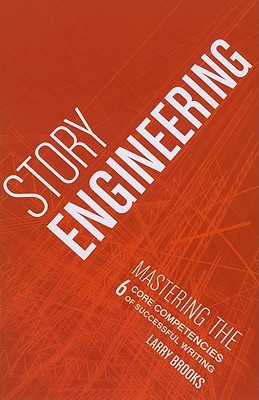
Last post I told you of my challenges with NaNoWriMo beyond the normal ones I’ve dealt with before. And I told you that using five sign posts from James Scott Bell’s work on Super Structure gave me exactly what I needed to work on five separate, but linked, manuscripts, mysteries, no less, during November Madness. If you haven’t read Super Structure: The Key to Unleashing the Power of Story, stop reading this post and buy that book! I use Story Engineering (Larry Brooks) and Bell’s Write Your Novel from the Middle, along with Super Structure as my triad for planning my stories.

In Super Structure, Bell posits that in each well-crafted story, the protagonist faces death. The death can be physical, professional, or personal. In each “death”, ramifications are dire if the death occurs. So my five novelettes had to have five “death” threats.


Bell identifies five tent poles, part of his 14 signposts, that will support any length story. The examples I am using are from the five novelettes in Ancient Grease, my culinary mysteries set in the Aegean. Alli and Gina are demonstration cooks on a luxury liner that cruises back and forth between Istanbul and Athens. Because of the different ports of call, I wrote five linked mysteries.

In order to write five short mysteries, I relied on Bell’s five signposts (plus one) for my structure. The five signposts are: Disturbance, The Doorway of No Return #1, The Mirror Moment, The Doorway of No Return #2, and The Final Battle. The five stories in Ancient Grease are:

“Talk Turkey”: Set in Istanbul right before Alli and Gina board the ship for their summer gig as demo cooks on a luxury cruise liner, Alli sees a thief she observed in the Grand Bazaar on board the ship. When a major theft occurs on the ship, Alli knows whodunit . . . she thinks.

“The Garden of Eaten”: Alli meets a pastor who is taking some faithful people to visit the recently found Garden of Eden site. Is it possible that is true?

“On the Lamb”: A puzzling passenger attracts Alli’s attention when not all is what it seems and when Alli questions that she puts her life in danger.

“Something Fishy”: Alli questions the ship’s executive chef about food safety, and since he already dislikes her, she is persona non grata in the kitchen. What is going on with the ship’s food sourcing?

“Ancient Grease”: Alli and Gina finish their summer contract and disembark in Athens. Before heading home to Arizona, they have a job cooking for a charity dinner theater producing a Greek play where the actor in the play doesn’t just die in the play.

To illustrate how I constructed the stories, here are some of the signposts for them:

The Q Factor:
James Bond always had a gadget that was kind of the modern version of the old Greek plays’ deus ex machina. You know what I mean, a god intervenes and saves someone who is doomed with no way out. So, Bell built that in as a cool factor to include as one of his signposts.

In “Talk Turkey”, Alli (and all staff members) are given a GPS locator for emergency use if a passenger is in trouble or causing trouble. She does manage to save herself, but using the GPS locator gets reinforcement help to her site sooner. At this point, first draft stage, that is the only story with a Q Factor, but I am scouting Q Factor possibilities for at least one other novelette in this book when I revise.

Disturbance:
A disturbance serves several functions. It is a hook to engage the reader straight off. Something out of the ordinary happens. It also sets up what the story problem is going to be. It is loaded with clues that the reader won’t know are clues until later when the mystery solution begins to gel.

For example, in “On the Lamb” (It’s a culinary mystery, okay? I know how to spell the other “lam”.), Alli is sitting on the balcony of her room suite watching new passengers board. A object weighted with a rock sails past her and lands on the pier in front of her. A boarding passenger stops to pick it up and pockets the object while looking around in a suspicious manner.

Doorway of No Return #1:
Doorways of no return are self-explanatory, right? Once you go through the door, there is no turning back. Something shifts in the world, and it will never be the same again. The numbering is a tip that there’s another pivotal point coming down the road, but for now, the world as the protagonist knows it has ended.

In “The Garden of Eaten”, Alli approaches a passenger who is a minister for a conversation about religion and faith. She is not even agnostic; she simply gives no thought to religion to accept or reject. But the minister’s earnestness and goodness causes her to reconsider her stance. She finds that she is searching for something and religion/spirituality might hold part of her need.

The Mirror Moment:
Bell says that at the mid-point of a well-crafted story, the protagonist looks in a virtual mirror to consider one of two options the writer has set up. Either your protag is confronting imminent death (“I can’t win. I’m going to die.”) or irrevocable change (“Who AM I? What have I become? What do I have to change?). In this moment, the core value of your story is challenged. How the protag responds is the rest of the story. This is more than the doorways of no return; this moment goes to your story theme.

In “Talk Turkey” Alli must choose whether to go for justice or whether to give up pursuit of a crime she’s been warned off. Is she going to risk her job in order to continue investigating. If she doesn’t, she feels she is condoning the crime and criminal. She has to wrestle with what is at root important to her as a person.

Similarly, in “On the Lamb”, she deals with an issue she has struggled with in all the previous books: what is family and what do you owe them, if anything.

The Doorway of No Return #2:
This doorway, like the first, means there has been an irrevocable shift in the protagonist’s world. There is a new normal and the new normal has upended the status quo, yet again, but at a higher level, with greater stakes than before. This doorway leads to the inevitable final battle. A blockage occurs that makes the outcome questionable, but in going through the doorway the protag also gets new information, gets another clue, makes a discovery to carry into The Final Battle.

In “The Garden of Eaten”, Alli overhears a conversation that both reveals a major scam and that draws her into the circle of physical danger.

The Final Battle:
Sometimes The Final Battle is an internal struggle, but more often there is an action scene where the evil is confronted and the good prevails. Going back to the Mirror Moment, if the moment were one of confronting how must the protag change, then the battle is interior; if the moment were of the “I’m going to die” type, it will almost certainly be a physical confrontation.

In “The Garden of Eaten”, Alli has both moments going on. She is confronting a physical death at the end, but she also comes to a tentative resolution about the place of spirituality in her life.

In “Something Fishy”, The Final Battle is purely physical. The crooks are gonna do her in before she can turn them in, whereas in “On the Lamb”, Alli comes down on the side of her core value when she could reject that in order to do the legal thing.

If you are reading this saying, “Whoa! Are you trying to turn a pantser like me into a plotter?” I would respond to you that we have created a false dichotomy for ourselves with such a distinction. Bell isn’t judgmental about your writing style. He thinks it comes down to do you want to create a successful novel through a structure approach or an experimental one. Both successful novels will end up with these elements. Successful novels have them.

So start with structure or not. Your choice. But you will end up, in rewrites, including these elements. That is, you will if you want a successful novel. I choose to do it from the beginning because I am impatient to have my book done as soon as possible. As I say, your choice.


If you liked this post, I would appreciate you sharing on Twitter and Facebook. Thanks so much!

Tweet: Writers: Planning made easy with this post by @good2tweat using @JamesScottBell’s Magic Five  http://bit.ly/27RJ5mc

Facebook: Do you struggle with planning your books? This post by Sharon Arthur Moore-Author should help. http://bit.ly/27RJ5mc

Friday, February 26, 2016

2015 NaNoWriMo the Easy/Easier Way


I have been away for a long time. Emotionally. And virtually. But things are shaping up now, so I am back to blogging again. This is a post about an old topic, but maybe not. National Novel Writing Month in November is only the beginning for us writers. Here’s what happened then and what is happening now.

I tried something very different for NaNoWriMo in 2015. I had decided to write book four in my culinary mystery series (books two and three coming out in 2016). So that doesn’t sound so different, eh? In November 2014, I wrote most of book three, Potluck. So what was so different?

2015’s NaNo experience continues the production of books in the “Dinner is Served” series. Ancient Grease follows the adventures of Alli and her personal chef business partner, Gina, in their work as demonstration chefs on a luxury cruise liner traveling back and forth in the Aegean Sea between Istanbul and Athens over one summer. Ancient Grease. Get it?

It seemed like a good idea, to use NaNo to get a jumpstart of 50K words of the 65K+ words novel. Except this one was different.

In the previous three books, I had 65K words (give or take) to create a murder mystery and solve it. Lots of plotting, clue dropping, and misdirection opportunities required, right? You’ve read before about my extensive plotting and planning. I am always ready for NaNo and crank out a bunch of words on November 1st.

I love Bells’ craft books. Write Your Novel from the Middle was a game-changer for me. The saggy, soggy, sinking middle always gave me fits. Once I read this book, I got it! I understood what I needed to do and it has worked.

Yeah, well what happens when you decide you can’t have a single mystery for the entire cruise time because you want to drop into different locales and involve more characters?

What happens when you aren’t doing one set of extensive, forty-scene plot cards but creating five?

What happens when you have to create new characters for each new story but keep up with the old ones hoping people read the book in order and don’t jump around in the titles which are oh-so-clever?

Yeah, well, that was me in mid-October anticipating a very different NaNoWriMo. But how to keep 12,000 to 15,000 words engaging? Not long enough for a novella and not short enough for a short story, these were five novelettes I was planning.

Did I panic? Uh, yeah!

Wouldn’t you?

Then, the miracle happened. I found my savior—in the form again of James Scott Bell. His book Super Structure: The Key to Unleashing the Power of Story delineates 14 signposts that comprise the super structure of a successful novel. But, he says, if that is overpowering for you, structure your story around just five of them and you will be successful.

I did and it worked.

The magic five? Disturbance, Doorway of No Return #1, Mirror Moment, Doorway of No Return #2, and Final Battle.

I’ll give examples of how I did it and when I used the Q Factor (another of his signposts) when it was appropriate. I’ll also reveal the five titles of the novelettes so you can anticipate its publication!

Come back and see me. Be sure to subscribe so you will be notified when new posts appear.