Showing posts with label James Scott Bell. Show all posts

Tuesday, August 29, 2017

Would You Take This Class?

-->
Few writers make much (if any) money. Did you know that? You don’t do this to get rich because that reason and the lottery odds have a lot in common.

Over the years, I’ve thought about a variety of ways to supplement my royalties. I could sell some of my professional/writing craft books on Amazon’s used books section. I could write advertising copy for companies. I could write quick and dirty writing craft books and indie publish them. I even considered offering on-line classes. That’s a novel idea for a former educator, right?

I approached the co-founder of one of my favorite on-line writing class sites with a couple of ideas for teaching classes for them. Might they be interested? It turns out they might.

I’m not naming the site or the person (yet) I contacted since “interest” is a long way from “implementation.” I’m just trying out some ideas here. I’m looking for help. Tell me what you think.

One excellent suggestion I was given was to offer the class to a few beta participants so I could refine the class after the initial design. Great! I will do that!

In the meantime, I am working on the 20 class lessons I could offer. Here are the general areas I’ve come up with so far. In the comments section, please offer critiques, suggestions, options, and other ideas that might help me design this course.

First the title.

The course is sharing with others and having them try the elements that I use when I plan my novels. I am a mega-planner, most of the time. The system I’ve developed over the years is what helps me “win” National Novel Writing Month, “winning” being defined as producing at least 50,000 words in 30 days.Whether the participant wants to win NaNoWriMo or whether heesh just wants to try the jump-start apart from NaNoWriMo, this course is designed to ramp up the planning process.

So what would be a good title for a mega-planning class? Planning Your NaNoWriMo Novel? Write/Writing Your Novel in 30 Days?  Planning for NaNoWriMo? Or do you have another idea?

I would pitch this as being for novels not yet written, novel ideas not drafts.

Topics to be covered in 20 lessons (some take more than one day to present):
 
-->
            Plotter or Pantser? A spurious distinction.
            Choosing a mentor text for assignments; what it is and
                   why it’s important
            Recommendations for several craft books for later
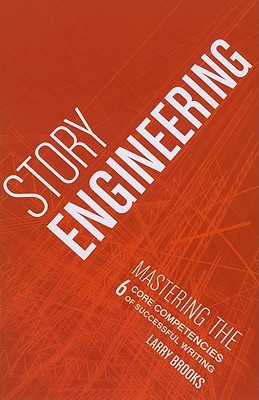
                  reading such as Larry Brooks' Story Engineering and 
                  James Scott Bell's Write Your Novel from the Middle 
                  and others
            What planning gets you and why you should do it
            Bell’s 14 signposts
  Bell’s five essential tent poles
            Premise vs concept
            Concepts and sub-concepts
            10 key events
            Character sketches
            Story treatment
            Scene grid Elements
            Using the scene grid for planning
            Writing the first scene


Lessons/Assignments (some take more than one day):
  
-->
            Advantages of plotter. Advantages of pantser. Where are
                  you and why?
            Choosing your mentor text—the components: your 
                  genre; recent; well-written
            List craft books you’ve read and their influence on you
            What does “planning” mean?
            Find examples of Bell’s signposts in mentor text
            List your concept. List your premise.
            Identify your sub-concepts
            List your 10 key events
            Write five character sketches
            Write a three-page story treatment with main characters 
                   and plot twists including the ending
            Design your scene grid
            Fill in your scene grid from the middle out
            Write the first scene from your scene grid

So the question remains: would you take this course? Do you have suggestions for inclusion or change?

Bloggers appreciate you spreading the word. If this post helped you, tell others. Copy/paste the messages and post to your social media. Thanks so much!

Facebook: Sharon Arthur Moore wonders if you’d take this on-line writing class on how to plan your novel. What suggestions do you have for improvement? http://bit.ly/2xlWx4P

Twitter: Would You Take This Class? Give feedback for a proposed on-line writing class for novel planning. http://bit.ly/2xlWx4P

Tuesday, May 24, 2016

The Magic Five: Using Bell's Super Structure


Last post I told you of my challenges with NaNoWriMo beyond the normal ones I’ve dealt with before. And I told you that using five sign posts from James Scott Bell’s work on Super Structure gave me exactly what I needed to work on five separate, but linked, manuscripts, mysteries, no less, during November Madness. If you haven’t read Super Structure: The Key to Unleashing the Power of Story, stop reading this post and buy that book! I use Story Engineering (Larry Brooks) and Bell’s Write Your Novel from the Middle, along with Super Structure as my triad for planning my stories.

In Super Structure, Bell posits that in each well-crafted story, the protagonist faces death. The death can be physical, professional, or personal. In each “death”, ramifications are dire if the death occurs. So my five novelettes had to have five “death” threats.


Bell identifies five tent poles, part of his 14 signposts, that will support any length story. The examples I am using are from the five novelettes in Ancient Grease, my culinary mysteries set in the Aegean. Alli and Gina are demonstration cooks on a luxury liner that cruises back and forth between Istanbul and Athens. Because of the different ports of call, I wrote five linked mysteries.

In order to write five short mysteries, I relied on Bell’s five signposts (plus one) for my structure. The five signposts are: Disturbance, The Doorway of No Return #1, The Mirror Moment, The Doorway of No Return #2, and The Final Battle. The five stories in Ancient Grease are:

“Talk Turkey”: Set in Istanbul right before Alli and Gina board the ship for their summer gig as demo cooks on a luxury cruise liner, Alli sees a thief she observed in the Grand Bazaar on board the ship. When a major theft occurs on the ship, Alli knows whodunit . . . she thinks.

“The Garden of Eaten”: Alli meets a pastor who is taking some faithful people to visit the recently found Garden of Eden site. Is it possible that is true?

“On the Lamb”: A puzzling passenger attracts Alli’s attention when not all is what it seems and when Alli questions that she puts her life in danger.

“Something Fishy”: Alli questions the ship’s executive chef about food safety, and since he already dislikes her, she is persona non grata in the kitchen. What is going on with the ship’s food sourcing?

“Ancient Grease”: Alli and Gina finish their summer contract and disembark in Athens. Before heading home to Arizona, they have a job cooking for a charity dinner theater producing a Greek play where the actor in the play doesn’t just die in the play.

To illustrate how I constructed the stories, here are some of the signposts for them:

The Q Factor:
James Bond always had a gadget that was kind of the modern version of the old Greek plays’ deus ex machina. You know what I mean, a god intervenes and saves someone who is doomed with no way out. So, Bell built that in as a cool factor to include as one of his signposts.

In “Talk Turkey”, Alli (and all staff members) are given a GPS locator for emergency use if a passenger is in trouble or causing trouble. She does manage to save herself, but using the GPS locator gets reinforcement help to her site sooner. At this point, first draft stage, that is the only story with a Q Factor, but I am scouting Q Factor possibilities for at least one other novelette in this book when I revise.

Disturbance:
A disturbance serves several functions. It is a hook to engage the reader straight off. Something out of the ordinary happens. It also sets up what the story problem is going to be. It is loaded with clues that the reader won’t know are clues until later when the mystery solution begins to gel.

For example, in “On the Lamb” (It’s a culinary mystery, okay? I know how to spell the other “lam”.), Alli is sitting on the balcony of her room suite watching new passengers board. A object weighted with a rock sails past her and lands on the pier in front of her. A boarding passenger stops to pick it up and pockets the object while looking around in a suspicious manner.

Doorway of No Return #1:
Doorways of no return are self-explanatory, right? Once you go through the door, there is no turning back. Something shifts in the world, and it will never be the same again. The numbering is a tip that there’s another pivotal point coming down the road, but for now, the world as the protagonist knows it has ended.

In “The Garden of Eaten”, Alli approaches a passenger who is a minister for a conversation about religion and faith. She is not even agnostic; she simply gives no thought to religion to accept or reject. But the minister’s earnestness and goodness causes her to reconsider her stance. She finds that she is searching for something and religion/spirituality might hold part of her need.

The Mirror Moment:
Bell says that at the mid-point of a well-crafted story, the protagonist looks in a virtual mirror to consider one of two options the writer has set up. Either your protag is confronting imminent death (“I can’t win. I’m going to die.”) or irrevocable change (“Who AM I? What have I become? What do I have to change?). In this moment, the core value of your story is challenged. How the protag responds is the rest of the story. This is more than the doorways of no return; this moment goes to your story theme.

In “Talk Turkey” Alli must choose whether to go for justice or whether to give up pursuit of a crime she’s been warned off. Is she going to risk her job in order to continue investigating. If she doesn’t, she feels she is condoning the crime and criminal. She has to wrestle with what is at root important to her as a person.

Similarly, in “On the Lamb”, she deals with an issue she has struggled with in all the previous books: what is family and what do you owe them, if anything.

The Doorway of No Return #2:
This doorway, like the first, means there has been an irrevocable shift in the protagonist’s world. There is a new normal and the new normal has upended the status quo, yet again, but at a higher level, with greater stakes than before. This doorway leads to the inevitable final battle. A blockage occurs that makes the outcome questionable, but in going through the doorway the protag also gets new information, gets another clue, makes a discovery to carry into The Final Battle.

In “The Garden of Eaten”, Alli overhears a conversation that both reveals a major scam and that draws her into the circle of physical danger.

The Final Battle:
Sometimes The Final Battle is an internal struggle, but more often there is an action scene where the evil is confronted and the good prevails. Going back to the Mirror Moment, if the moment were one of confronting how must the protag change, then the battle is interior; if the moment were of the “I’m going to die” type, it will almost certainly be a physical confrontation.

In “The Garden of Eaten”, Alli has both moments going on. She is confronting a physical death at the end, but she also comes to a tentative resolution about the place of spirituality in her life.

In “Something Fishy”, The Final Battle is purely physical. The crooks are gonna do her in before she can turn them in, whereas in “On the Lamb”, Alli comes down on the side of her core value when she could reject that in order to do the legal thing.

If you are reading this saying, “Whoa! Are you trying to turn a pantser like me into a plotter?” I would respond to you that we have created a false dichotomy for ourselves with such a distinction. Bell isn’t judgmental about your writing style. He thinks it comes down to do you want to create a successful novel through a structure approach or an experimental one. Both successful novels will end up with these elements. Successful novels have them.

So start with structure or not. Your choice. But you will end up, in rewrites, including these elements. That is, you will if you want a successful novel. I choose to do it from the beginning because I am impatient to have my book done as soon as possible. As I say, your choice.


If you liked this post, I would appreciate you sharing on Twitter and Facebook. Thanks so much!

Tweet: Writers: Planning made easy with this post by @good2tweat using @JamesScottBell’s Magic Five  http://bit.ly/27RJ5mc

Facebook: Do you struggle with planning your books? This post by Sharon Arthur Moore-Author should help. http://bit.ly/27RJ5mc